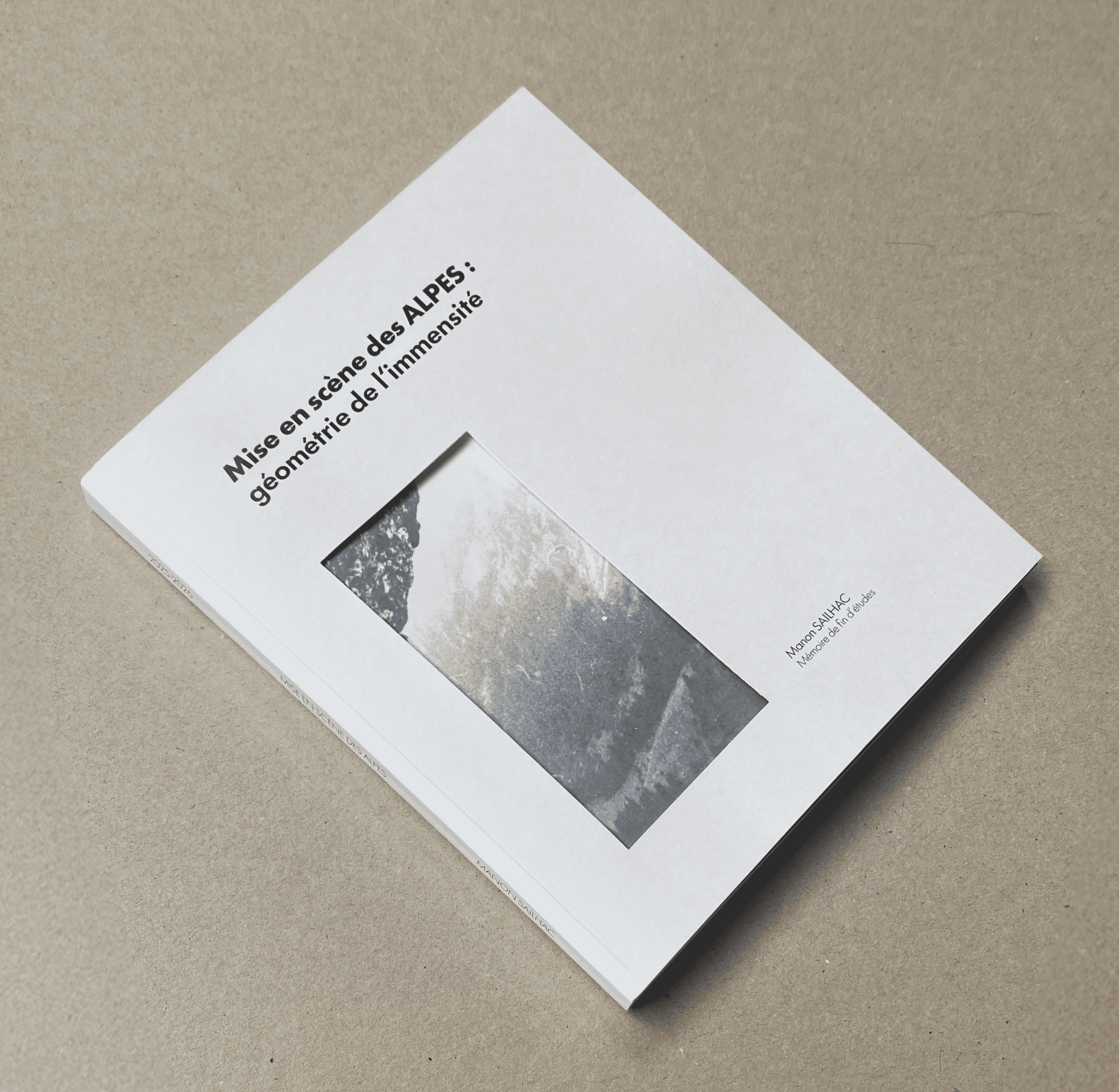
Once feared, mountains have become popular places for contemplation. A multiplication of architectural means supports this transformation intended to organise the experience of the sublime. In this context of growing development, the relationships between architecture for observing and the Alpine landscape, and more generally between body and immensity, form the main questions of this dissertation.
Based on historical and theoretical analyses and field surveys, this work questions how these measures influence the Alps' relationship to the sublime, between amplifying emotion and depletion by over-guided framing. The challenge is to understand how to arrange contemplation spaces that preserve a perceptible experience of the Alpine landscape.