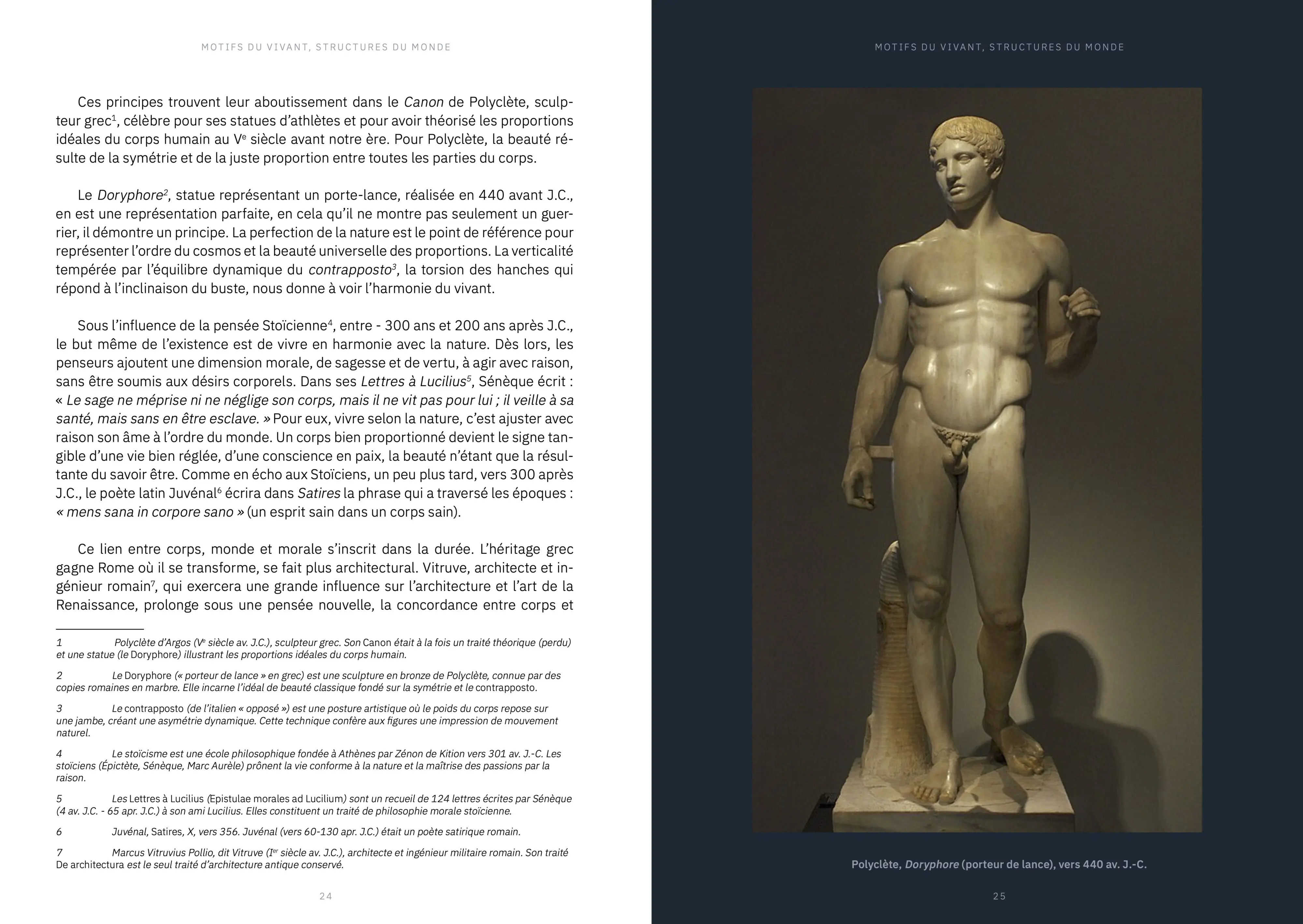
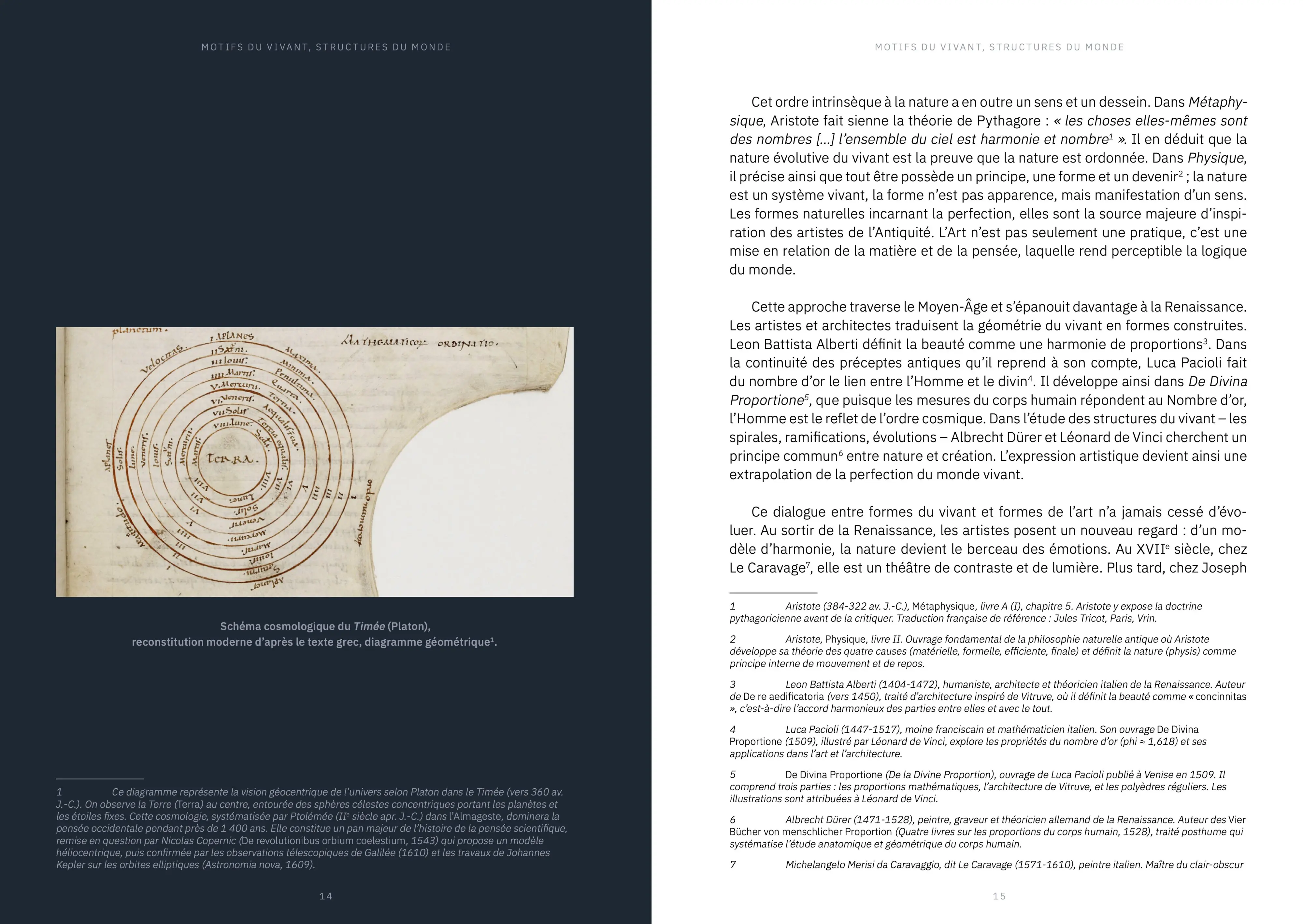
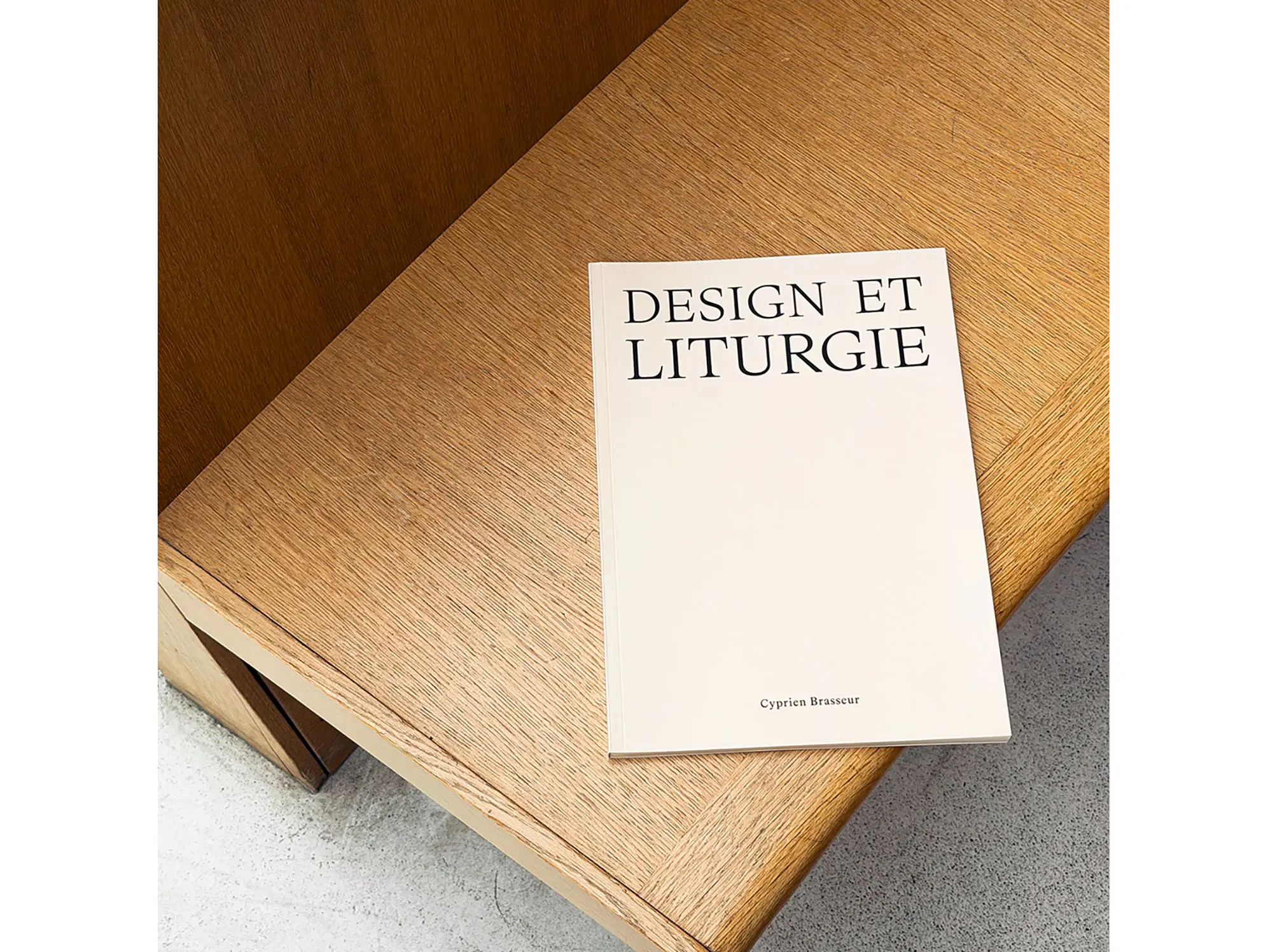
This dissertation examines how patterns and structures from life span the history of art and architecture to express our relationship with the world. Since antiquity, the body and nature have been perceived as models of order, measure and harmony, carrying aesthetic, moral and spiritual meaning. The Renaissance systematised this interpretation by geometrising the living, until proportion became a universal language. Modernity marks a rupture, transforming nature into a resource and an object of control. Faced with this fracture, contemporary practices seek to reconnect with the living, not as a form to imitate, but as a relationship to experience. Art then becomes a perceptible mediation space, capable of reinventing the way we live in the world.