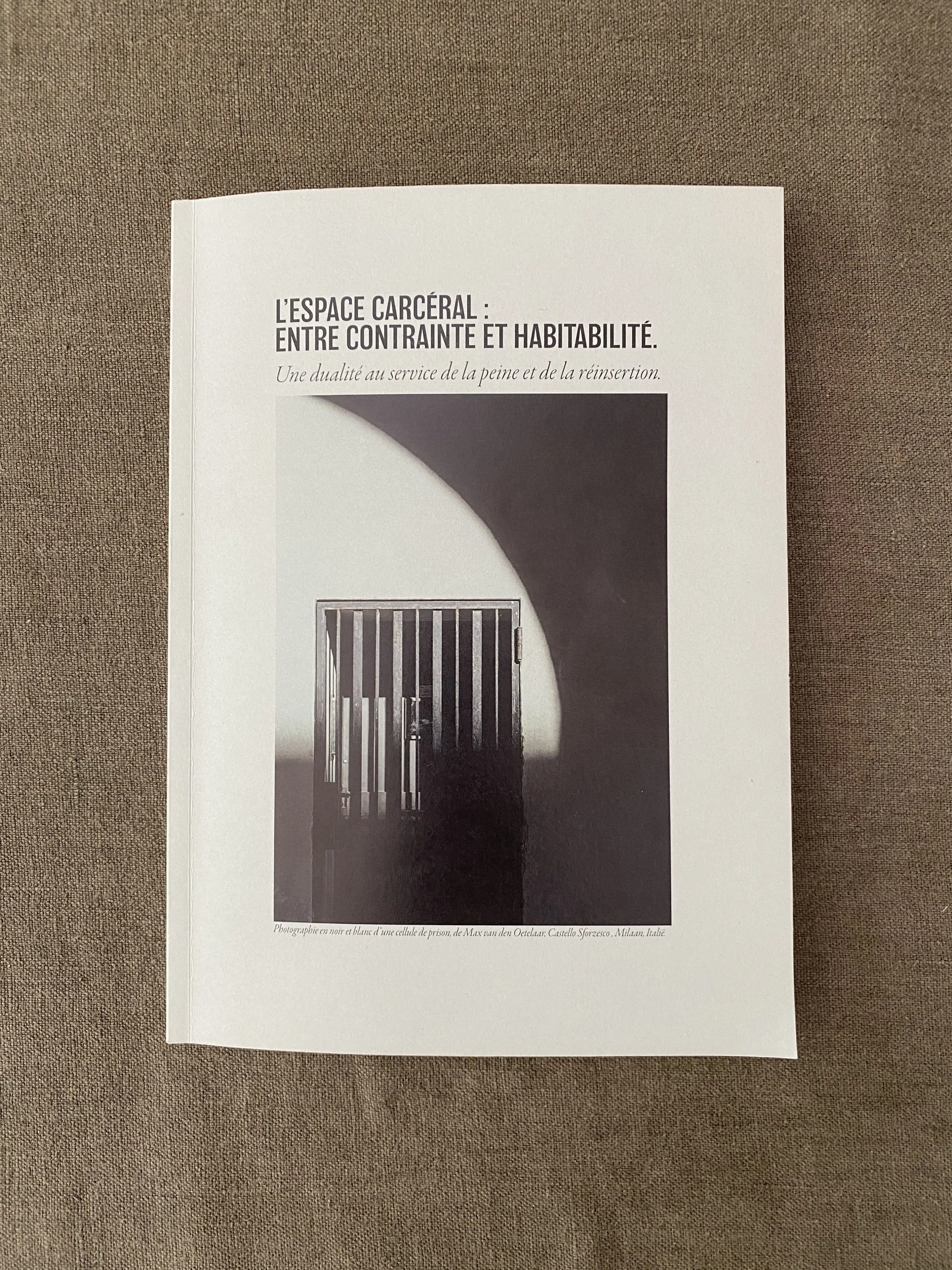
This dissertation explores the duality of prison architecture to understand how space can be both an instrument of punishment and a lever for transforming people. By questioning how architecture contributes to the penalty, this work reveals, implicitly, the values and paradoxes of our social model.
Reflection is centred around how the sentence evolves, from public power to isolated and silent spatial control. By putting current political choices into perspective, the study analyses the paradox between safe isolation and rehabilitation. It questions the ability of the space to preserve dignity and social connections, essential pillars of the process of returning to normality.