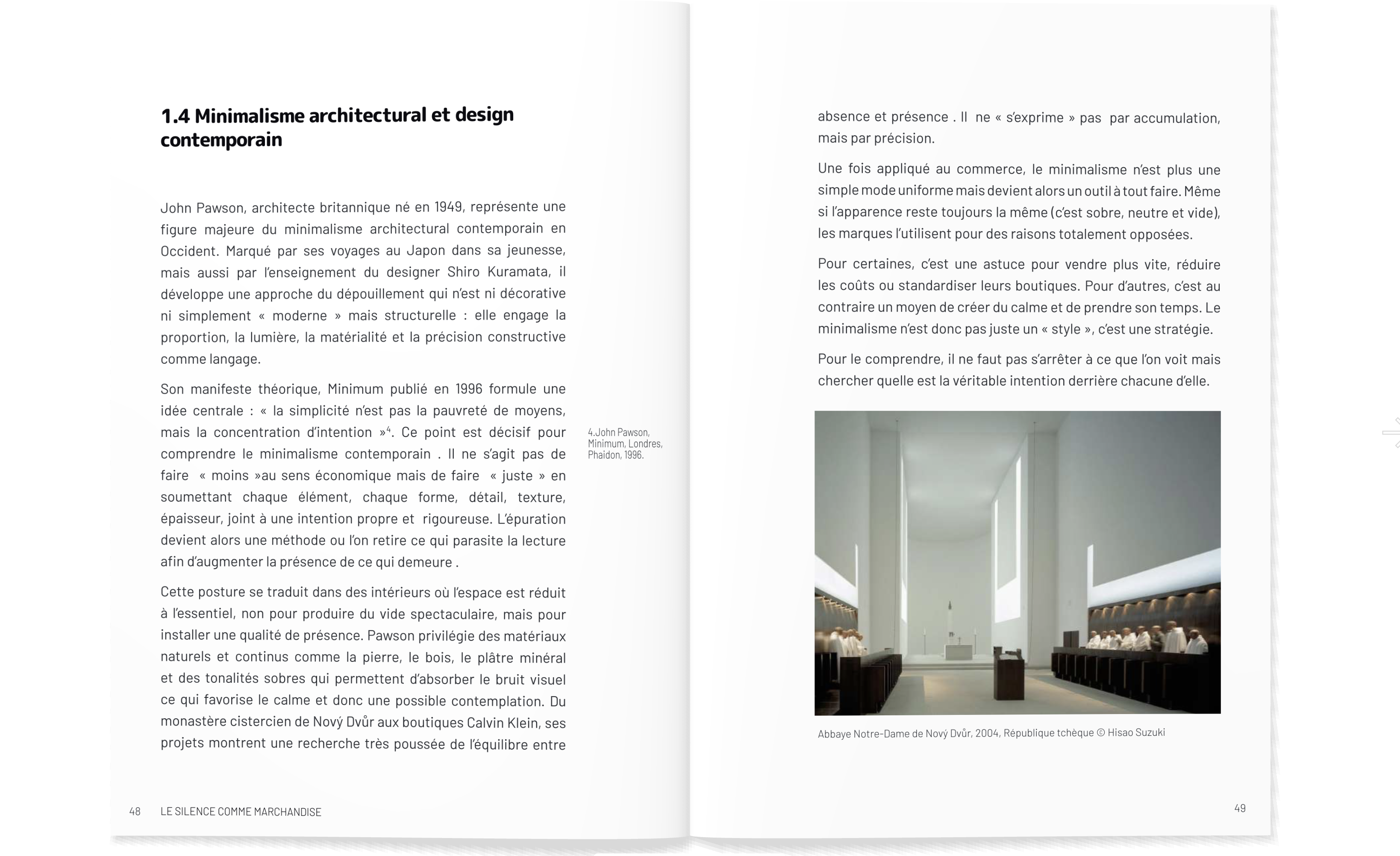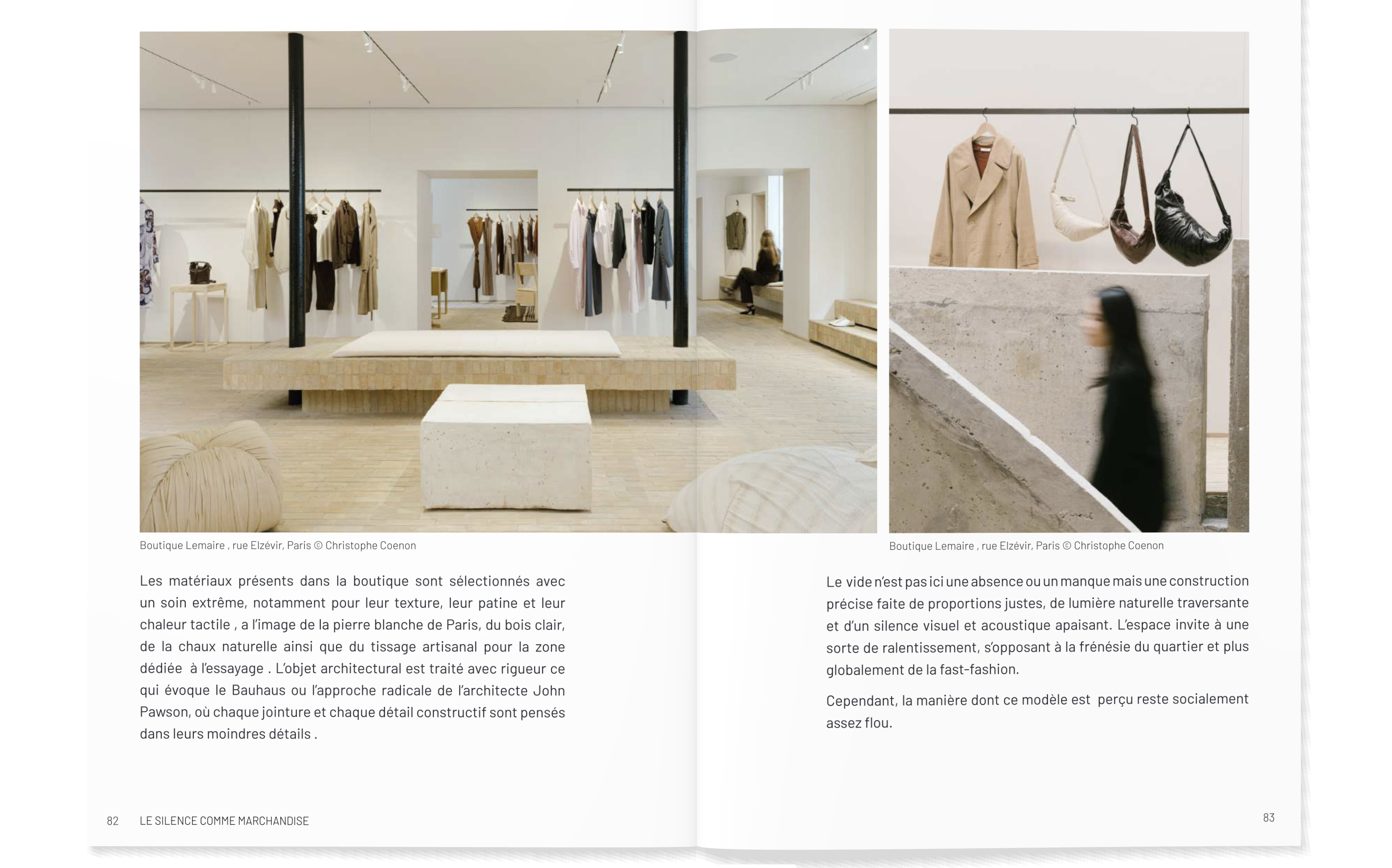


This dissertation looks at how minimalist clothing stores transform the “emptiness” into a way to attract people, between the promise of a calming haven and sophisticated commercial strategy. Retracing the philosophical, religious, architectural and artistic roots of minimalism, it shows how a sincere quest for simplicity and meaning is reclaimed by brands from Zara to Balenciaga to create desire, rarity and status.
Through several case studies, it questions whether this retail minimalism is real breathing space in the face of market saturation or merely a simulator of authenticity masking a new form of controlling attention and consumer behaviour.